A routine inspection done well in New Zealand looks like this: no more than once every four weeks, written notice that reaches the tenant at least 48 hours and no more than 14 days before the visit, and the visit itself between 8am and 7pm on the day the notice named. A landlord who keeps to those three rules, and writes up what they found the same day, rarely ends up in an argument about access.
The common reading of the four-week rule is that it is a target. Inspect monthly, the thinking goes, and nothing slips past you.
It is a ceiling. The law caps how often you can knock, it does not tell you to knock that often, and a tenant who feels watched is rarely a tenant who reports the slow leak under the sink. A quarterly round with a proper record each time does more for the property, and for any later dispute, than twelve rushed visits with nothing written down.
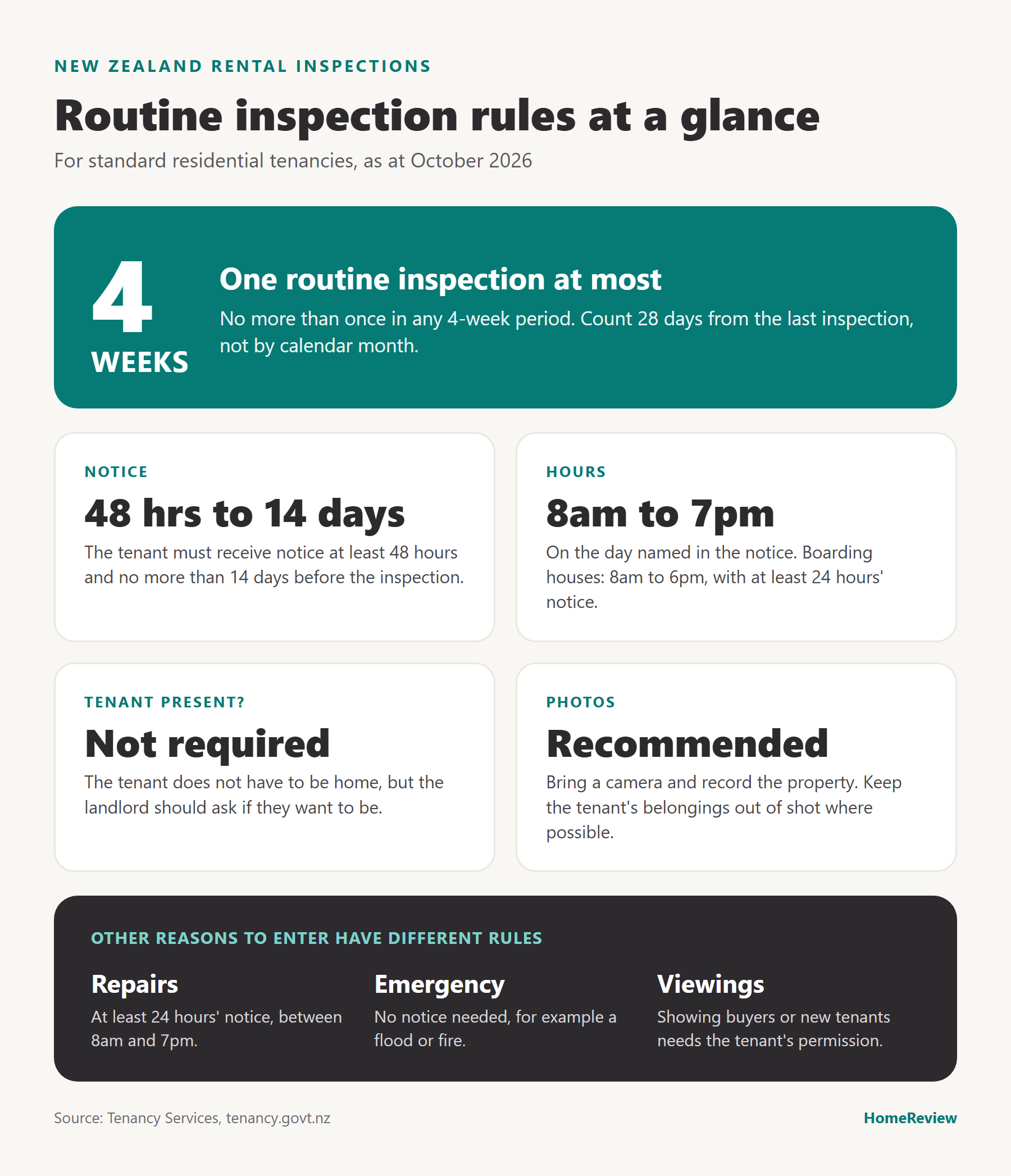
The short answer: in New Zealand a landlord can carry out a routine inspection no more than once every four weeks. They must give the tenant at least 48 hours' notice and no more than 14 days', and the inspection must take place between 8am and 7pm. (Source: Tenancy Services)
The Four-Week Limit Is a Rolling Period
Good practice is to date each inspection from the last one, not from the calendar. The Residential Tenancies Act limits routine inspections to one in any period of four weeks, which is 28 days, not "once a month".
Most of the time that difference never shows. It shows when a visit gets moved. Say the March inspection slips from the 3rd to the 17th because the tenant asked for a later date, and the April one stays booked for the 7th. That is 21 days apart, and the second visit is outside the rules even though both notices were perfect.
The fix is dull and reliable. When an inspection is done, the earliest date for the next one is 28 days later, and that is the date to diary.
Notice: At Least 48 Hours, No More Than 14 Days
The notice should name the day of the inspection and land in the tenant's hands inside that window. Tenancy Services sets it at 48 hours minimum and 14 days maximum for an ordinary rental, and 24 hours minimum for a boarding house.
What catches people out is how long notice takes to arrive. The 48 hours count from when the notice is received, and Tenancy Services treats each delivery method differently:
- 01
Handed to the tenant
Received immediately. The simplest way to be certain, if you are passing anyway.
- 02
Email
Received the same day if sent before 5pm, the next working day if sent after. It only counts if that email address is listed in the tenancy agreement as an address for service.
- 03
Letterbox or door
Received two working days after it is delivered. A notice dropped on Thursday evening is not received until Monday.
- 04
Post
Received on the fourth working day after posting. Posting on a Monday for a Wednesday inspection does not work.
A self-managing Wellington landlord with four units who emails notice at 6pm on Friday for a Monday 10am visit has not given 48 hours. The email counts as received on Monday morning.
Hours, and Whether the Tenant Needs to Be Home
An inspection happens between 8am and 7pm on the day stated in the notice, or between 8am and 6pm for a boarding house. Turning up at 7.30pm because the tenant gets home late is outside the rules, even with goodwill on both sides.
The tenant does not have to be there. Tenancy Services adds one thing many landlords skip: ask whether they want to be. Plenty would rather not be. The ones who do come tend to mention the dripping tap and the sticky window while you are standing next to them, which is half the reason you came.
When a Landlord Can Enter for Other Reasons
The four-week limit applies to routine inspections only. Other entry has its own rules, set out on the Tenancy Services access page, and mixing them up is where most access complaints start.
- Repairs and maintenance: at least 24 hours' notice, with work done between 8am and 7pm.
- Emergencies: no notice needed for something like a flood or a fire.
- With the tenant's permission: entry is allowed whenever the tenant agrees.
- Showing the property to buyers or new tenants: this needs the tenant's permission, not just notice. A tenant cannot refuse unreasonably, but they can set reasonable conditions.
- The grounds only: no notice is needed to clean gutters or wash the outside of the house.
- A reinspection: if you and the tenant agreed something would be fixed by a set date, you can come back to check it, giving proper notice.
A repair visit is not an inspection with a toolbox. If the plumber is there for the hot water cylinder, that is the job.
The Tenant's Side of the Visit
In practice that means a tenant can expect the notice the law requires, a visit on the day and within the hours it named, and an inspection of the property rather than of their life. They cannot refuse a properly notified routine inspection, but they can raise a genuine problem with the timing, and a sensible landlord moves the date. The landlord must never use force, or the threat of it, to get in while someone is inside.
If a landlord keeps entering outside the rules, the tenant can raise it in writing and, if it carries on, apply to the Tenancy Tribunal. This is not legal advice. For a particular situation, Tenancy Services is the first call.
What to Check, and How to Record It
Good practice is the same rooms, in the same order, recorded the same way every time, so this round can be laid next to the last one. Before you go, read the previous report and any maintenance requests since. Tenancy Services says to always bring a camera and photograph anything that might later be disputed, keeping the tenant's belongings out of frame where you can.
A workable checklist for an NZ rental:
- Exterior: walls, doors, windows, gutters, the garden if the tenant looks after it
- Living areas and bedrooms: walls and ceilings, floors and carpet, windows and curtains
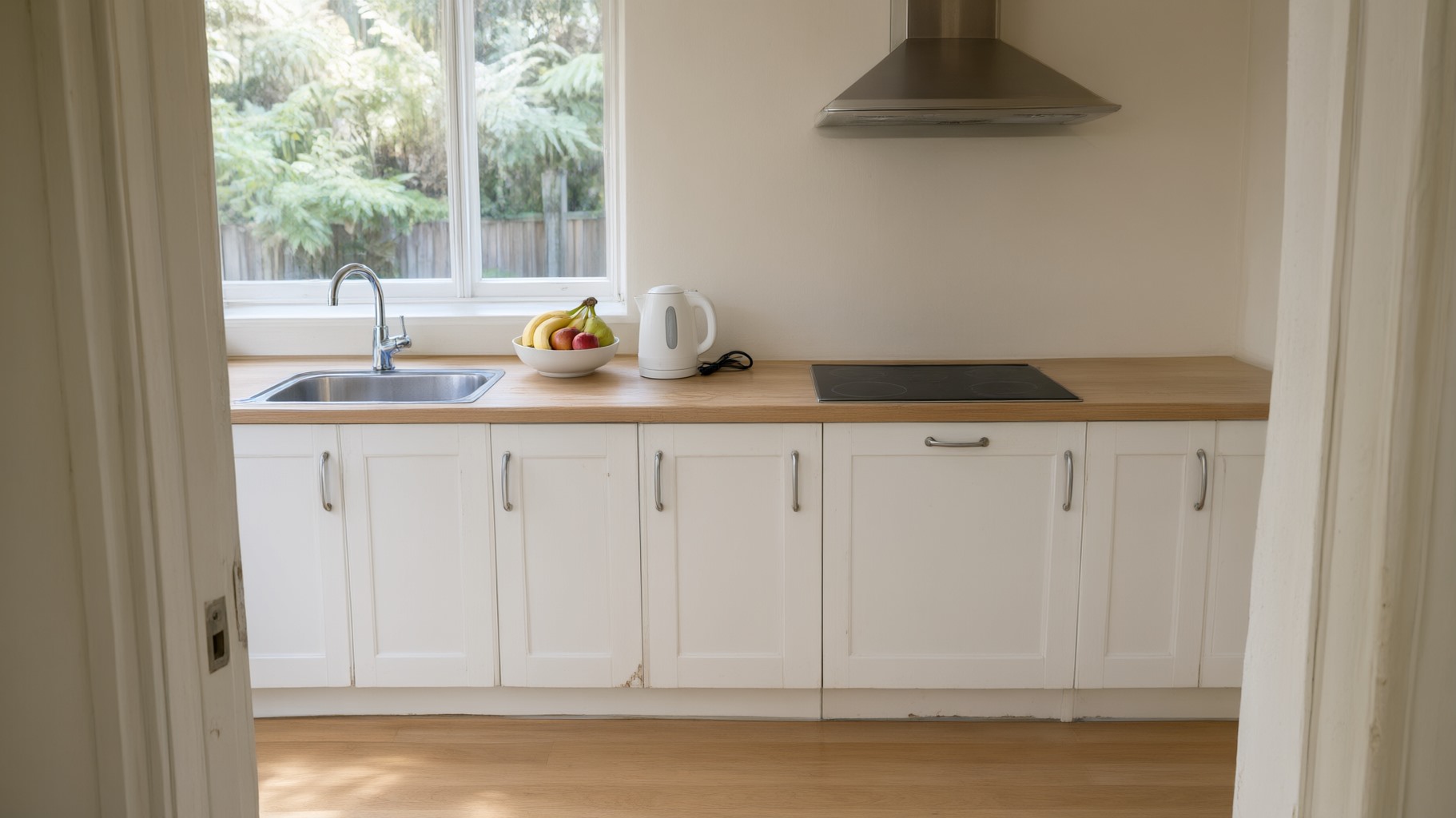
- Kitchen: benchtop, cabinetry, oven and hob, sink and taps
- Bathroom and laundry: leaks, mould, the extractor fan, fixtures
- Heating and ventilation: the heat pump or heater runs, fans and window stays work
- Smoke alarms: present, in date and working
- Since last time: anything that has changed, and anything reported and not yet fixed
Then write it up the same day, send the tenant anything that needs action, and book repairs. A finding with a date and a photo is a record. A finding in someone's memory is an argument waiting to happen. That record also feeds into everything else the year asks of you, which the 2026 compliance guide covers.
Three Habits That Keep Inspections Clean
- 01. Diary from the last visit. The next earliest date is 28 days after the last inspection, wherever the calendar falls. Moved visits are where the four-week rule breaks.
- 02. Send notice so it lands in time. Hand it over or email it to the address for service before 5pm. Post and letterbox drops need working days you might not have.
- 03. Record it the same day. Same rooms, same order, photos of the fabric of the house. The record is what you will rely on at the end of the tenancy.
HomeReview runs routine rounds at 3, 6, 9 and 12 months, well inside the four-week limit, and keeps each one as a dated, room-by-room record. You can see how inspection records are held.
Frequently Asked Questions
How often can a landlord inspect a property in New Zealand? No more than once in any four-week period for a routine inspection.
How much notice does a landlord have to give? At least 48 hours and no more than 14 days, counted from when the tenant receives the notice. Boarding houses need at least 24 hours.
Can a landlord inspect every month? Only if each visit is at least 28 days after the last one. The rule is four weeks, not a calendar month.
Can a landlord enter while the tenant is out? Yes, for a properly notified inspection. The landlord should still ask whether the tenant wants to be there.
Can a tenant refuse an inspection? Not a routine inspection with proper notice. They can ask for a different time if there is a genuine reason, and showing the property to buyers or new tenants needs their permission.
Can a landlord inspect without notice? Not for a routine inspection. An emergency such as a flood or fire is the exception.
Can a landlord take photos? Yes. Tenancy Services recommends it, while keeping the tenant's belongings out of shot where possible.
_Sources: Tenancy Services (tenancy.govt.nz). As at October 2026. Tenancy rules change; check Tenancy Services before relying on any detail here._
Leave a Comment
0 Comments