
A modern tenant record holds everything a property manager needs to make a confident decision in one place. The application, the references, the ID verification status, the lease, the dated communications log, the inspection history with photos and timestamps, the renewal calendar — all attached to a single tenant, in a single predictable shape.
Each entry is dated, attributed, and sourced. A property manager picking up the file knows the same things the previous manager did, without forwarding an inbox. A Tenancy Tribunal adjudicator asking for evidence can be answered the same afternoon.
This is not aspirational. A typical 30-property Auckland agency in 2026 already runs something close to this, and a self-managing Wellington landlord with four units can run a version on a single laptop. What sits between "I have the information somewhere" and "I have the record on tap" is a small set of operational habits.
The rest of this guide describes four pillars of modern tenant intelligence — structured records, proportionate behaviour signals, inspection-linked history, and clear audit trails — and the habits that make each one routine rather than heroic.
Pillar 1 — Structured tenant records
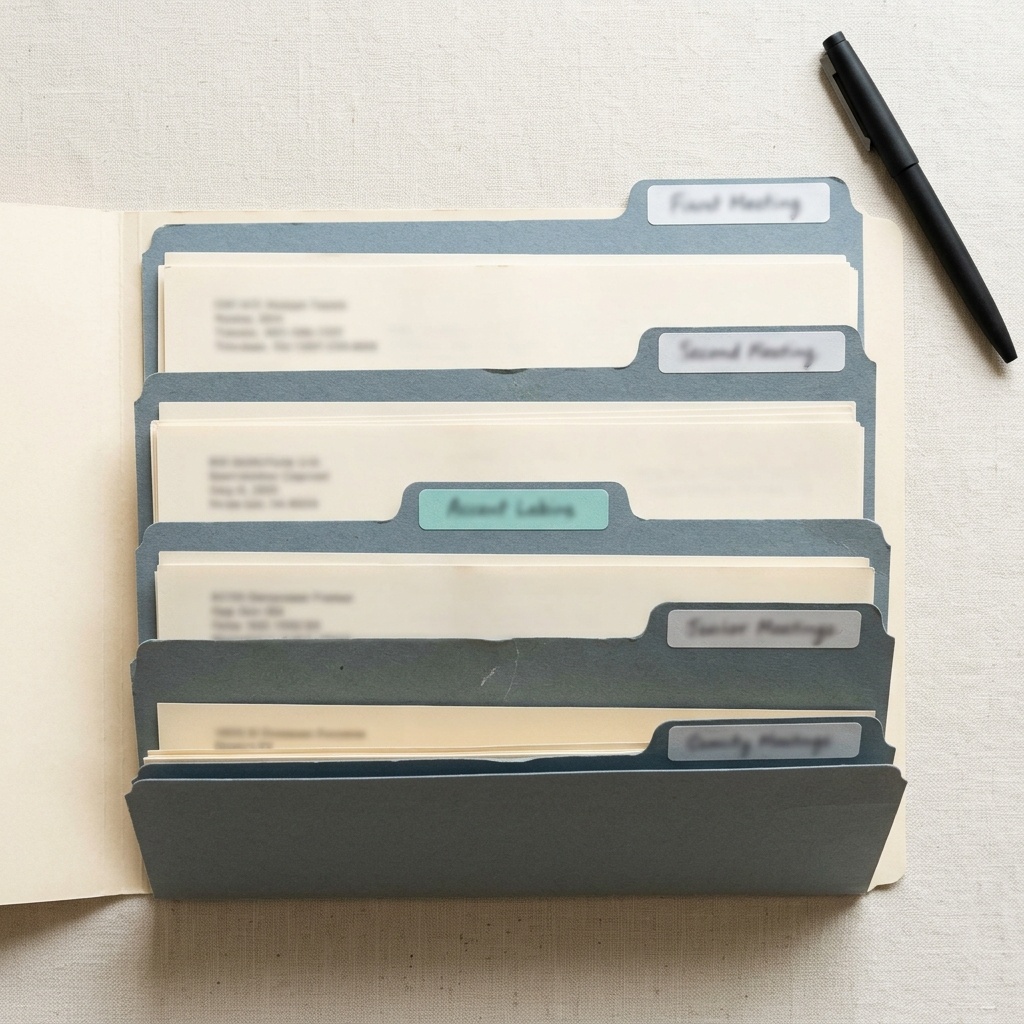
Good practice starts with one record per tenant, in the same shape every time. The application data the agency captured at sign-on, the ID verification status, named prior landlords with the dates of each tenancy, references the agency contacted and what came back, the lease itself, the bond handling, and a chronological communications log linked to the property. Every entry has a date, an author, and a clear source.
The reason structured beats free-form is operational, not aesthetic. The same field means the same thing across every tenant, which makes the data searchable. The same shape means a colleague picking up the file finds the relevant context in the place they expect it. And the same discipline produces a record that can be produced on demand in a format a regulator or a Tenancy Tribunal adjudicator would recognise as professional.
The habit that supports this is small. When a tenant emails about a maintenance issue, the response gets logged to the tenant's record at the time it is sent — not transcribed later. When a reference is taken over the phone, the note goes onto the file the same day. When ID is verified, the status updates immediately, even before the lease is countersigned.
A modern tenant intelligence platform makes the structured habit easier to keep, because the structure of the platform itself enforces shape. The same field appears at the same point in the workflow whether the property manager has been at the agency for ten years or ten days.
The visible benefit is faster screening. The deeper benefit is calmer handovers — when staff turn over, properties change agencies, or a portfolio gets sold, the record moves with the tenant in a shape the next owner can use.
Pillar 2 — Behaviour signals with appropriate privacy guardrails

Good practice keeps the behavioural layer relevant, dated, and sourced — and stops collecting at the point of relevance.
A modern tenant record reflects how a tenancy has gone, not how the property manager felt about it. Payment patterns during the current and previous tenancies, inspection outcomes against a consistent rubric, dated communications about lease compliance, the outcome of any documented dispute — these are legitimate behavioural signals. They are specific, proportionate, and have a clear purpose for the next decision the property manager makes.
The Office of the Privacy Commissioner has consistently described the pattern: collect what you need, for a clear reason, with explicit consent where required, store it securely, and dispose of it cleanly. Anything beyond that needs a defensible reason — and "we have always collected it" is not one.
What does not belong in a behavioural record is unverified third-party impression, generalised characterisations of a tenant's "type", or information collected without a documented purpose. These are not signals. They are opinion, and they create both privacy risk and downstream decision risk for the agency.
The operational pattern that handles this well is built on four habits: define the fields up front, date every entry, attribute every entry to its source, and set a retention rule for each category of data. HomeReview's AI-assisted tenant summary works on top of these structured fields — it does not invent behavioural signals, it surfaces the ones the agency has already captured and dated.
For a self-managing Wellington landlord with four units, this discipline is the difference between a defensible reference call and a hopeful one. For a 200-property Christchurch agency, it is the difference between a screening decision that takes a week and one that takes an afternoon.
Pillar 3 — Inspection-linked history

Good practice attaches every inspection to the tenant and the property, with photos, timestamps, notes, and a clear close-out status.
Inspection history is part of tenant intelligence, not a separate file. The point of the inspection record is partly to evidence property condition for any future dispute, partly to build a behavioural pattern over time, and partly to give the agency a defensible record of due care. A tenant who consistently keeps a property in good condition is a different proposition at renewal from one who does not — and the record needs to show that, in the shape an adjudicator or the next agency manager would recognise.
A useful inspection record holds the date, the inspector's name, condition notes against a consistent rubric, photos with embedded timestamps, follow-up actions where any are required, and the close-out date when those actions are resolved. Without those elements an inspection note is a memory aid — useful internally, but not robust enough to settle a Tribunal question.
HomeReview schedules and logs the routine inspections that sit inside the property manager's own workflow — entry, periodic, exit — and holds the resulting record alongside the tenant file. It does not deliver Healthy Homes assessments or any other regulated compliance certification; those remain the work of licensed assessors, and the certificate sits on the property file alongside everything else once the assessor delivers it.
Across the lifecycle, inspection-linked history compounds. At renewal, the property manager can see how the property has changed under this tenant. At exit, the entry-condition photos sit alongside the exit-condition photos as one comparison set. Across the portfolio, the patterns inform pricing, planned maintenance budgets, and renewal strategy.
The new Residential Property Manager regulation regime — part of the wider 2026 compliance picture for NZ property managers — expects documented professional practice. Inspection-linked history is what that looks like in everyday operation.
Pillar 4 — Audit-ready trails
Good practice means any decision the property manager has made — about an application, a notice, a renewal, an inspection finding — is traceable through documented inputs, dated entries, and named decision-makers.
Audit trails matter more in 2026 than they used to for three reasons. The Residential Property Manager regulation regime expects professional practice to be demonstrable in writing. The Tenancy Tribunal continues to favour clean documentary evidence over recollection. And tenant references, when called on by the next agency, are taken more seriously when the record behind them looks like a record rather than a recollection.
A useful audit trail has a few non-negotiable properties. Entries are timestamped at the moment of writing, not backdated later. Edits are version-tracked so an earlier state can be recovered if needed. The system knows which user accessed which record. And the rationale behind a notable decision — to decline an applicant, to escalate an inspection finding, to issue a notice — is captured at the point of decision, not assembled retrospectively when the question comes up.
The cultural shift that makes audit-readiness automatic is the assumption that any record might be reviewed. Once an agency operates as if every entry could be inspected by a regulator, a Tribunal adjudicator, or the next property manager who inherits the property, the question of whether to document something stops coming up. Everything gets documented because that is what the role looks like.
For a 30-property Auckland agency, the practical test is straightforward: pull a random tenant file from a year ago and ask whether the screening decision can be reconstructed end-to-end from what is on file. The agencies finding the 2026 environment comfortable are the ones who could answer "yes" to that test before 2026 began.
Where this leaves the property manager
Modern tenant intelligence is what happens when these four pillars — structured records, proportionate behaviour signals, inspection-linked history, and clear audit trails — work as one connected system rather than four separate folders.
The decisions become faster. The handovers between staff become routine. The Tribunal disputes that do reach a hearing are easier to defend. The day-to-day work feels calmer because the documentation that used to sit at the bottom of a to-do list now happens at the point the work is done.
The benefit is not a slicker tool. It is a steadier operating rhythm for the agency, and a clearer experience for the tenants the agency serves. That is what modern tenant intelligence is for.
A practical next step
To see what a structured tenant profile looks like in practice, see a sample tenant profile. It is the clearest way to picture how the four pillars sit inside a single record.
Or, if you would like a fifteen-minute walkthrough of how HomeReview pulls these four pillars together in one workspace, book a short demo. You will leave with a clearer view of where your agency currently sits against each pillar.
_Sources: Tenancy Services (tenancy.govt.nz), Ministry of Housing and Urban Development (hud.govt.nz), Office of the Privacy Commissioner (privacy.org.nz), Real Estate Institute of New Zealand (REINZ)._
Leave a Comment
0 Comments