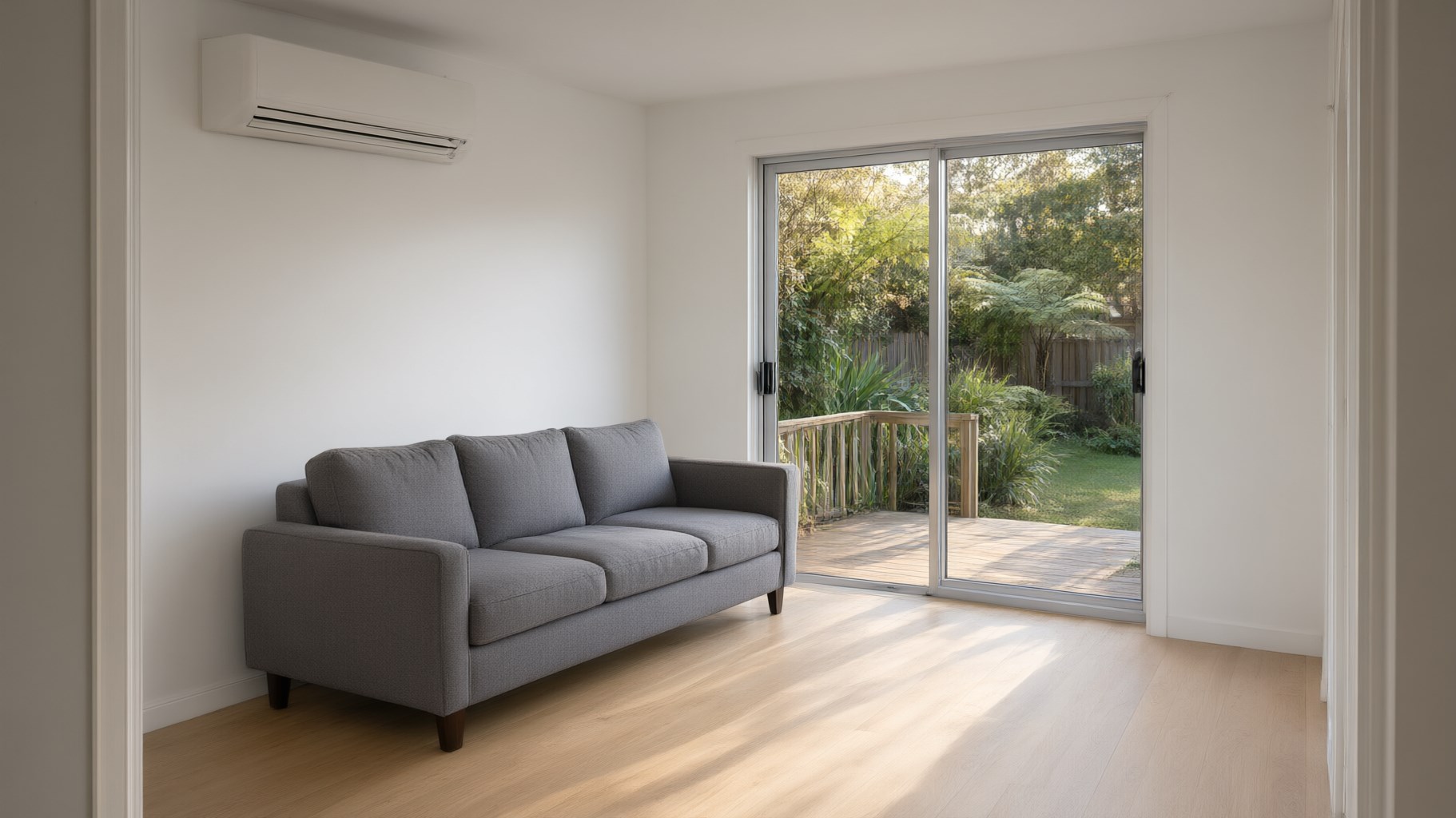
A good rental inspection report is one a stranger could pick up a year later and follow. It names the property, the date and who walked through. It goes room by room, says exactly what was found and where, backs the important points with dated photos, and finishes with a short list of who is fixing what, and by when.
Most people treat the report as a form to get through. Tick the boxes, write "all good" at the bottom, file it.
But a report is really a comparison waiting to happen. Its value shows up months later, when someone lays it next to the move-in report and asks what changed. Everything you write should make that comparison easy.
What a Rental Inspection Report Is
A rental inspection report is a written record of how a property looked on one particular day. There are two kinds, and they do different jobs.
The move-in report (Tenancy Services calls it the initial property inspection) is done at the start of the tenancy. Landlord and tenant should walk through together, and both should sign, date and keep a copy. Routine reports come during the tenancy and track how the property is holding up.
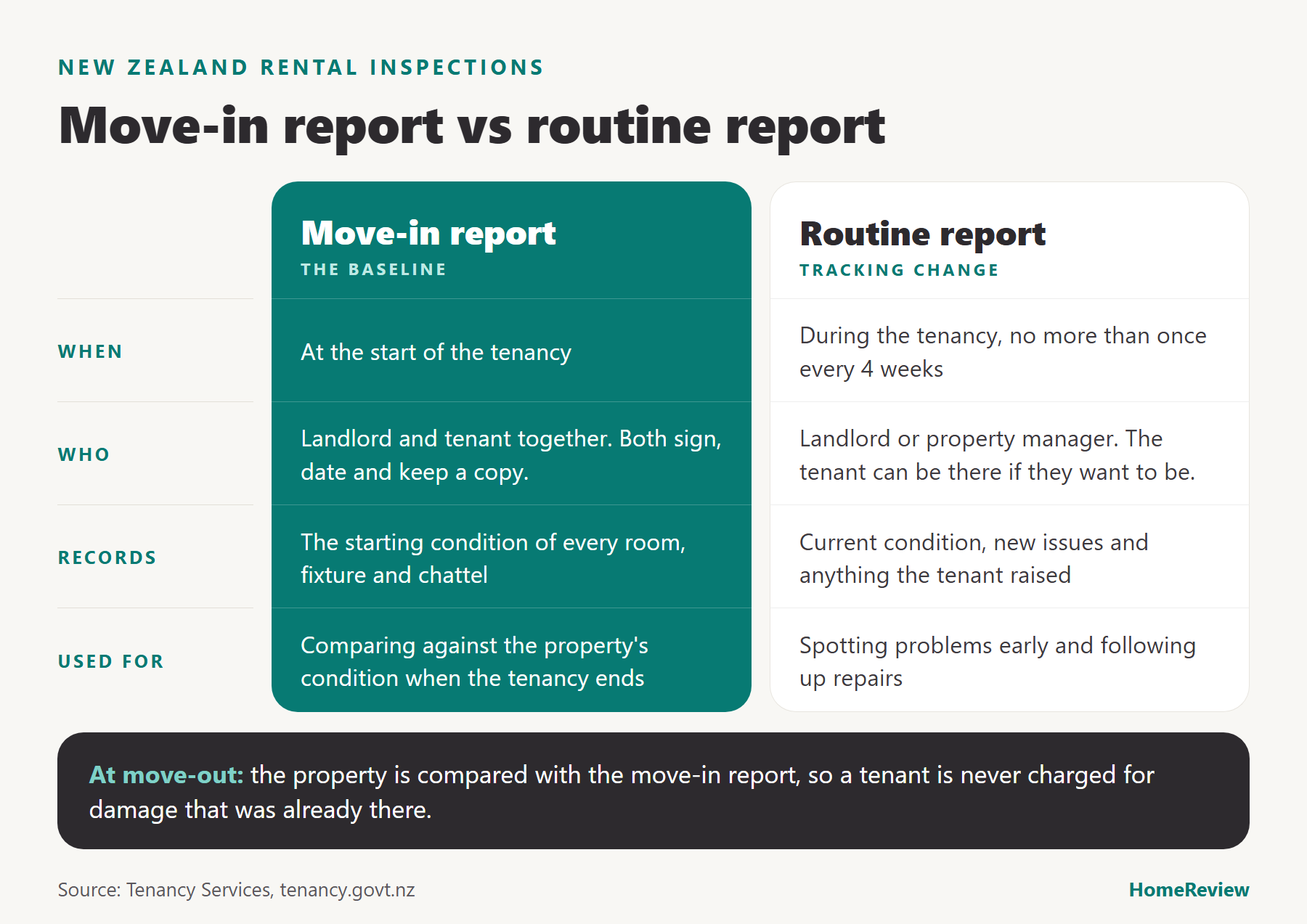
The move-in report is the baseline. When the tenancy ends, the property is compared against it, so a tenant is never charged for damage that was there before they arrived.
The Eight Things Every Report Should Include
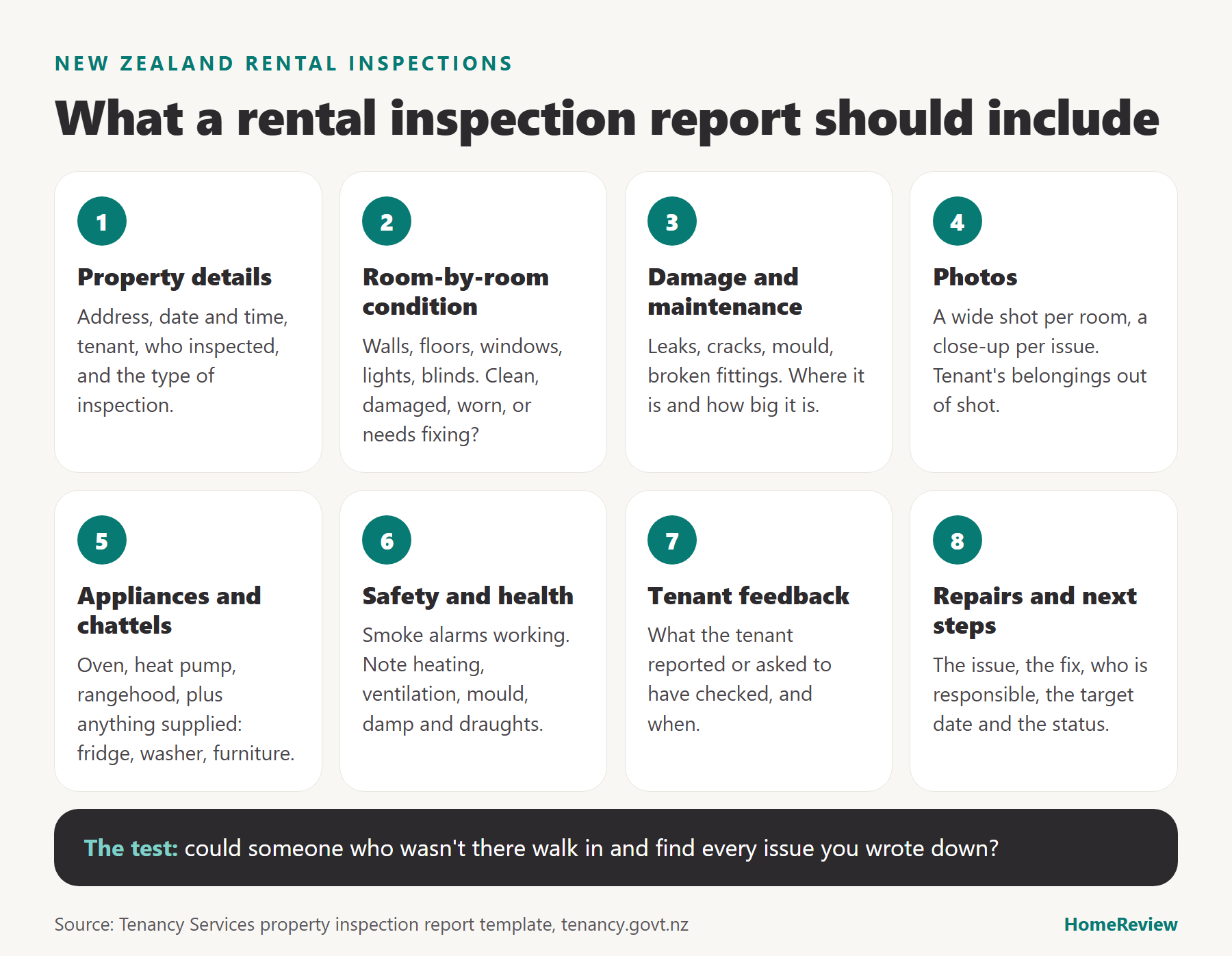
1. Property and inspection details
The address, date and time, tenant's name, landlord or property manager, who did the inspection, and what kind it was: move-in, routine or final. A report with no date on it is close to useless the day someone disagrees with it.
2. The condition of each room
Go room by room, in the same order every time. The Tenancy Services inspection template checks walls and doors, lights and power points, floors, windows, and blinds or curtains in every room, then adds things like the oven, shower, toilet and ventilation. Don't skip the laundry, garage, grounds and gutters.
For each area, note four things: is it clean, is anything damaged, is there normal wear, and does anything need fixing.
3. Damage, defects and maintenance issues
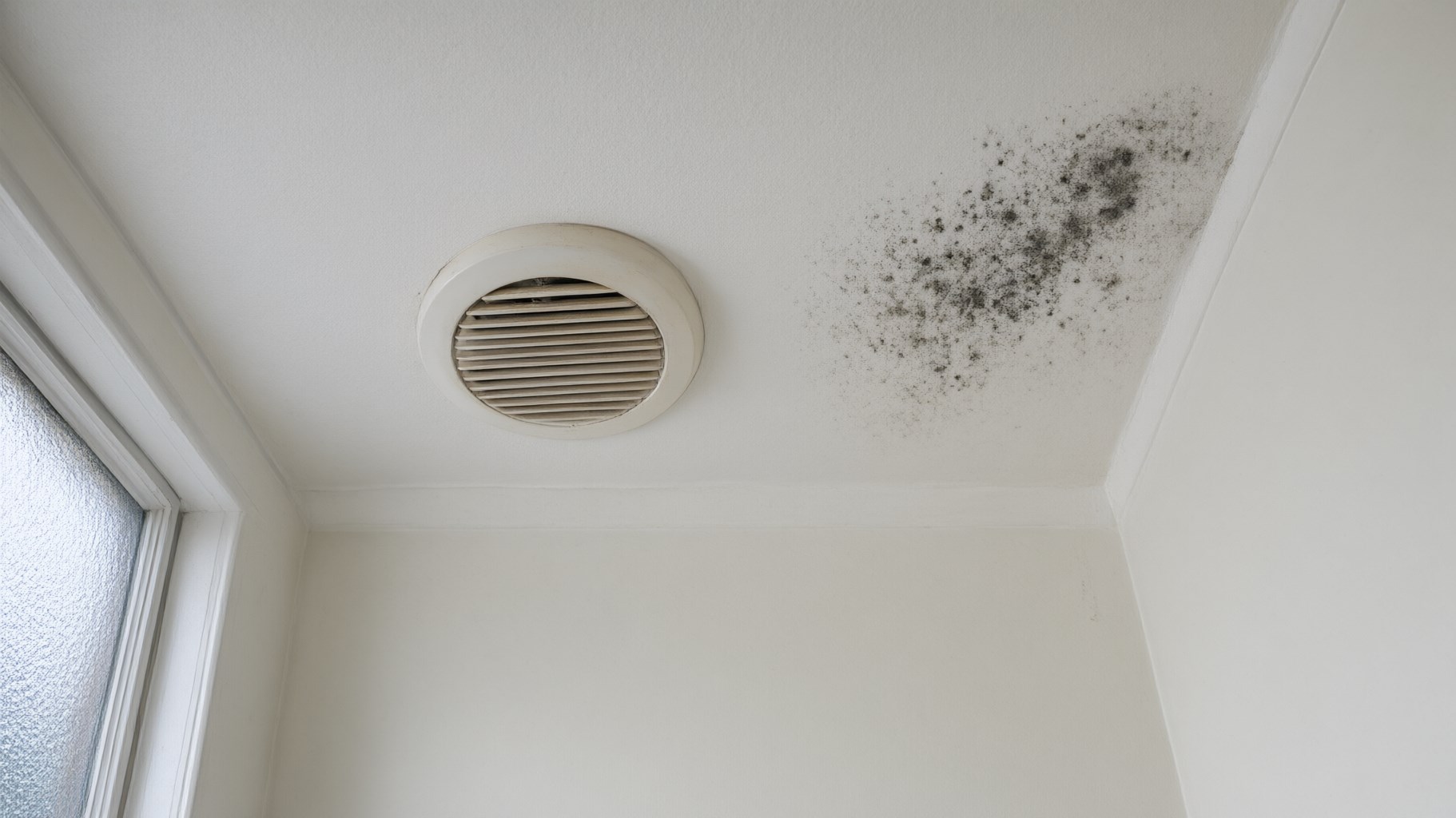
Leaks, cracks, mould, damp patches, broken fittings, a window that won't latch. Write down where it is and how big it is.
"Water stain on the bathroom ceiling above the shower, about the size of a dinner plate" is a record. "Some marks in bathroom" is not. Keep damage separate from fair wear and tear, too. A hallway carpet that has thinned over four years is not the same as a burn mark by the heater.
4. Photos
Tenancy Services says to bring a camera and photograph anything that might be disputed, while keeping the tenant's belongings out of the shot where you can. Photograph the house, not the person's life. A wide shot of each room plus a close-up of each issue covers most needs.
5. Appliances, fixtures and chattels
The oven, cooktop, rangehood and heat pump, plus anything else supplied: fridge, washing machine, curtains, furniture. The official template ends with a chattels list for this reason. For a furnished rental, this inventory is often the part of the report that gets read most closely at the end.
6. Safety and health observations
Check the smoke alarms are there and working. Landlords must keep them in working order during the tenancy, with one within three metres of each bedroom door and one on every level. Then note anything that looks wrong: a heater that won't start, a dead extractor fan, mould, a draught, water pooling outside.
7. What the tenant raised
The tenant doesn't have to be there, but the landlord should ask whether they want to be. If they can't make it, they can leave a note of things they want checked. Either way, write down what they reported. It shows the issue was raised, and when, which protects both sides.
8. Repairs and next steps
End with a short action list. For each item: the issue, the fix, who is responsible, the target date, and its status. If you agree the tenant will clean or fix something by a set date, you can come back and reinspect, giving the usual notice.
How Much Detail Is Enough
Enough that someone who wasn't there could walk in and find the problem: a location, a rough size, a plain description.
Stick to facts. "Tenant is messy" is an opinion. "Food scraps on the kitchen bench, rubbish bin overflowing" is something anyone can check. And look back at the last report before you write the new one. A Christchurch property manager with a crack noted as 10cm in March and 25cm in September has spotted a problem early. Without the first measurement, they'd only have a crack.
After the Inspection
Write the report up the same day, while it's fresh. Send the tenant anything they need to act on, book the repairs that are yours, and keep the invoices with the report. Sending the tenant a full copy costs nothing and avoids surprises later.
Then keep it. Landlords must hold property inspection reports and records of maintenance work during the tenancy and for 12 months after it ends.
Three Habits That Make Reports Worth Keeping
- 01. Be specific. Where it is, how big it is, what it looks like. A note nobody else can find is not a record.
- 02. Photograph the property. A wide shot per room, a close-up per issue, the tenant's belongings out of frame where you can.
- 03. Close the loop. Every issue gets an owner and a date, and the next report says whether it was done.
HomeReview builds these habits in: each round, on a 3, 6, 9 and 12-month schedule, becomes a dated room-by-room report compared with the move-in baseline. You can see how HomeReview holds inspection records, and how they fit the rest of the year's paperwork in the 2026 compliance guide.
Frequently Asked Questions
What should a rental inspection report include?
Property details, room-by-room condition, damage, photos, appliances, safety observations, tenant feedback, and repairs with owners and dates.
Should a rental inspection report include photos?
Yes. Tenancy Services recommends photographing anything that might be disputed.
How often can a landlord inspect a rental in NZ?
No more than once every four weeks, with 48 hours' to 14 days' notice, between 8am and 7pm. Our guide to how often a landlord can inspect a rental covers the rules in full.
Does the tenant get a copy of the report?
For the move-in report, both landlord and tenant should sign and keep a copy. For routine reports, sending the tenant a copy is good practice.
How long should landlords keep inspection reports?
During the tenancy and for 12 months after it ends.
_Sources: Tenancy Services (tenancy.govt.nz), including the property inspection report template. As at October 2026. Tenancy rules change; check Tenancy Services before relying on any detail here._
Leave a Comment
0 Comments